

Quick answer: To get LAANC authorization, open an FAA-approved LAANC app, draw your flight area, choose a time and an altitude at or below the UAS Facility Map ceiling, and submit. Most requests come back approved in near-real time. Part 107 pilots who need to go higher can request further coordination at least 72 hours ahead.
It's 6:40 a.m. in a strip-mall parking lot. The roof you're shooting sits a mile and a half from a Class D airport, and the property manager wants photos before the tenants show up at eight. If you know how to get LAANC authorization, this is a two-minute task on your phone. If you don't, it's an awkward call to the client.
This post covers the fast path, the slow path, and the one thing LAANC never covers. If you're brand new, our post on what to do after passing Part 107 is the better place to start.
What is LAANC, and when do you need it?
14 CFR 107.41As of Sep 2026Source: FAA
LAANC is the FAA's automated system for approving drone flights in controlled airspace near airports. It stands for Low Altitude Authorization and Notification Capability, which is why everyone just says "lance."
You need it because of 14 CFR 107.41. That rule says you need prior ATC authorization to fly in Class B, C, or D airspace, or inside the surface area of Class E airspace designated for an airport. Class G, the uncontrolled stuff, needs no authorization at all.
As of September 2026, the FAA lists LAANC at 726 airports. Part 107 pilots can use it, and so can recreational flyers who have passed TRUST. It runs through private companies the FAA has approved, so you request it in an app, not on an FAA website.
How do you get LAANC authorization?
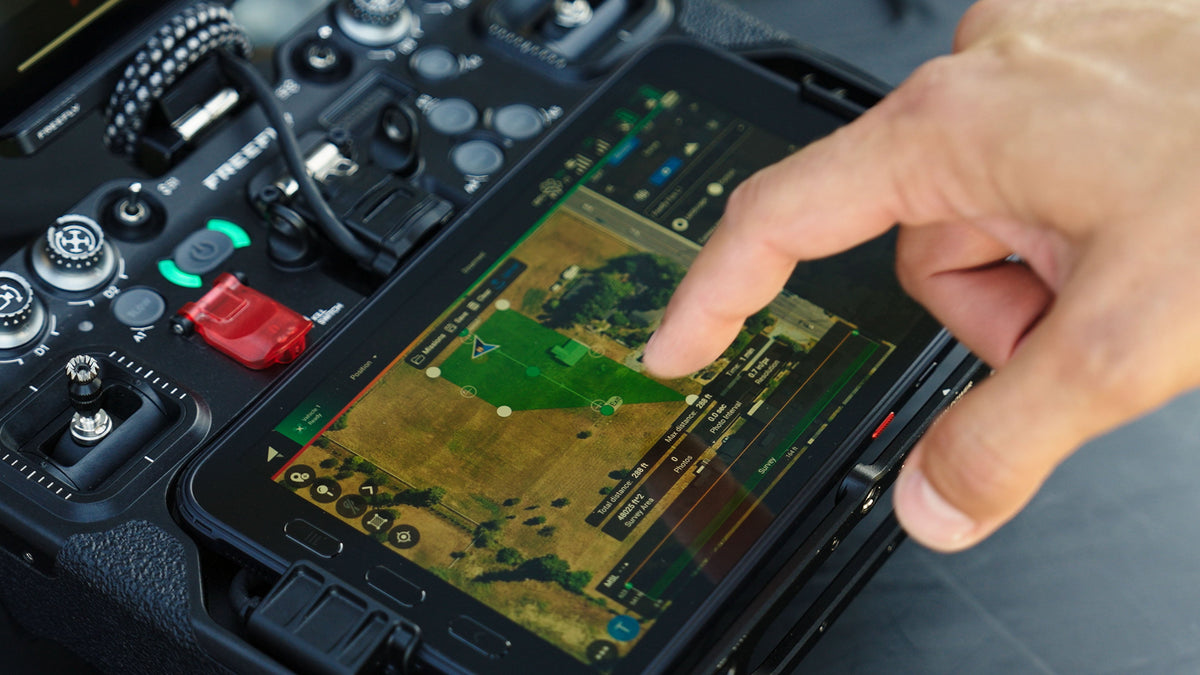
You submit a request through an FAA-approved LAANC app, and if your altitude is at or below the facility map ceiling, the approval usually arrives in seconds. The FAA's current list of approved suppliers includes Aloft, Airspace Link, AutoPylot, and Wing, among others. Pick one you like and stick with it, because your saved flight areas live there.
A LAANC request, start to finish- 1Check the airspaceConfirm the site is in controlled airspace and note the grid altitude on the UAS Facility Map.
- 2Draw your flight areaKeep it tight around the job. A smaller polygon is easier to fly inside and easier to defend.
- 3Set time and altitudeStay at or below the grid ceiling for a near-real-time answer. Requests can go in up to 90 days ahead.
- 4Submit and save the approvalKeep the confirmation on your phone and in your job file.
- 5Check NOTAMs before launchAn approval doesn't clear you through a TFR. More on that below.
The grid numbers matter more than anything else on the screen. Each square on a UAS Facility Map shows the highest altitude the FAA will approve automatically there. Near the runway it might be zero. A mile out it might be 200 feet. Ask for 210 in a 200-foot grid and you've left the fast lane.
What if you need to fly higher than the facility map allows?
As of Sep 2026Source: FAA
Part 107 pilots can request further coordination through LAANC, up to 400 feet. According to the FAA's airspace authorization page, an Air Traffic Manager reviews each one by hand, and you have to submit it between 90 days and 72 hours before the flight. Recreational flyers don't get this option.
Further coordination is not a formality. It can be denied, and the page says facilities may offer guidance when that happens. If a tall tower or stack is part of the scope, ask early and have a plan B at the grid altitude.
| Path | When to use it | How fast |
|---|---|---|
| LAANC, near-real time | At or below the facility map altitude, at a LAANC airport | Usually seconds |
| LAANC, further coordination | Above the map altitude, up to 400 ft, Part 107 only | Submit 90 days to 72 hours out; reviewed by hand |
| FAADroneZone airspace authorization | No LAANC at that airport, or a request LAANC can't handle | First come, first served; no published turnaround |
| Special Governmental Interest (SGI) | Emergency response, including flights inside a TFR | Minutes for many line-of-sight operations |
How do you get airspace authorization when LAANC isn't available?
As of Sep 2026Source: FAA
You file an airspace authorization in FAADroneZone. Log in, choose "Create Part 107 Waiver/Authorization," select Airspace Authorization, and fill in the operation title, dates, times, location, and maximum altitude. The FAA suggests a specific title, along the lines of "Photography shoot in MSP Class B airspace." Vague requests tend to come back with questions.
The working title for this post was "LAANC in five minutes, DroneZone in five weeks." The FAA doesn't promise either number. Its page says only that these authorizations are processed first come, first served, and that they cover both day and night operations. Plan in weeks, not days, and don't book the client until the approval is in hand.
If a site near the same airport keeps coming back, request the authorization for the whole recurring window, not one flight at a time. Future you will appreciate the one application.
Does LAANC authorization cover a TFR?
As of Sep 2026Source: FAA
No. A LAANC approval only covers the controlled airspace requirement in 107.41. Temporary flight restrictions are separate, and the FAA's TFR page says you must check NOTAMs before every flight. Some LAANC apps show active TFRs, which helps, but the app showing it is not the same as the FAA approving you inside it.
If you're supporting firefighting, search and rescue, law enforcement, utility restoration, or disaster damage assessment, the FAA's Special Governmental Interest process can authorize flights that LAANC can't, including inside some TFRs. You need a Part 107 certificate or an existing COA. For time-sensitive requests, the FAA lists its System Operations Support Center at 202-267-8276. It is not a shortcut for a stadium shoot.
How should airspace time show up in your quotes?
Treat airspace like any other line item: find out before you quote, not after you're booked. A five-minute LAANC check while the client is still on the phone tells you whether Tuesday is realistic.
Near-real-time LAANC jobs can go on the calendar the same week. Further coordination jobs need at least three days, and more if you want room for a denial. DroneZone jobs need a start date that depends on the approval, written into the quote that way. Clients handle "I'll confirm the date once the FAA approves" better than a cancelled shoot.
The aircraft matters here too. A lot of work near airports is inspection work, and a drone with a strong zoom camera can often get the shot from lower and farther away, which keeps you inside the grid. If you're choosing your first work aircraft, our enterprise drones are sorted by job type. And once you're flying regularly, keep your knowledge current with Part 107 recurrent training. Airspace questions are a big part of it.
Got a site near an airport?
Send us the address and the job, or call our team at 888-560-8737. We'll help you figure out the airspace and the aircraft before you quote it.
Frequently asked questions
How long does LAANC authorization take?
Near-real-time requests at or below the facility map altitude are usually approved in seconds. Further coordination requests are reviewed by hand and must be submitted at least 72 hours ahead.
Is LAANC free?
Many approved LAANC apps let you request authorization without paying, though some bundle it with paid plans. Check the app's terms before you rely on it for a job.
How far in advance can I request LAANC?
Up to 90 days before the flight, according to the FAA.
Can I use LAANC to fly at night?
Yes. Since 2021, Part 107 pilots can get near-real-time night authorizations through LAANC, as long as they meet the Part 107 night rules for lighting and training.
Do I need LAANC in Class G airspace?
No. Part 107 only requires ATC authorization in Class B, C, D, and surface-area Class E airspace.

Leave a comment
This site is protected by hCaptcha and the hCaptcha Privacy Policy and Terms of Service apply.